Research
My research advances machine learning and systems informatics methods for engineering and health applications.
Research Project 01
Autonomous Experimentation and Sequential Learning
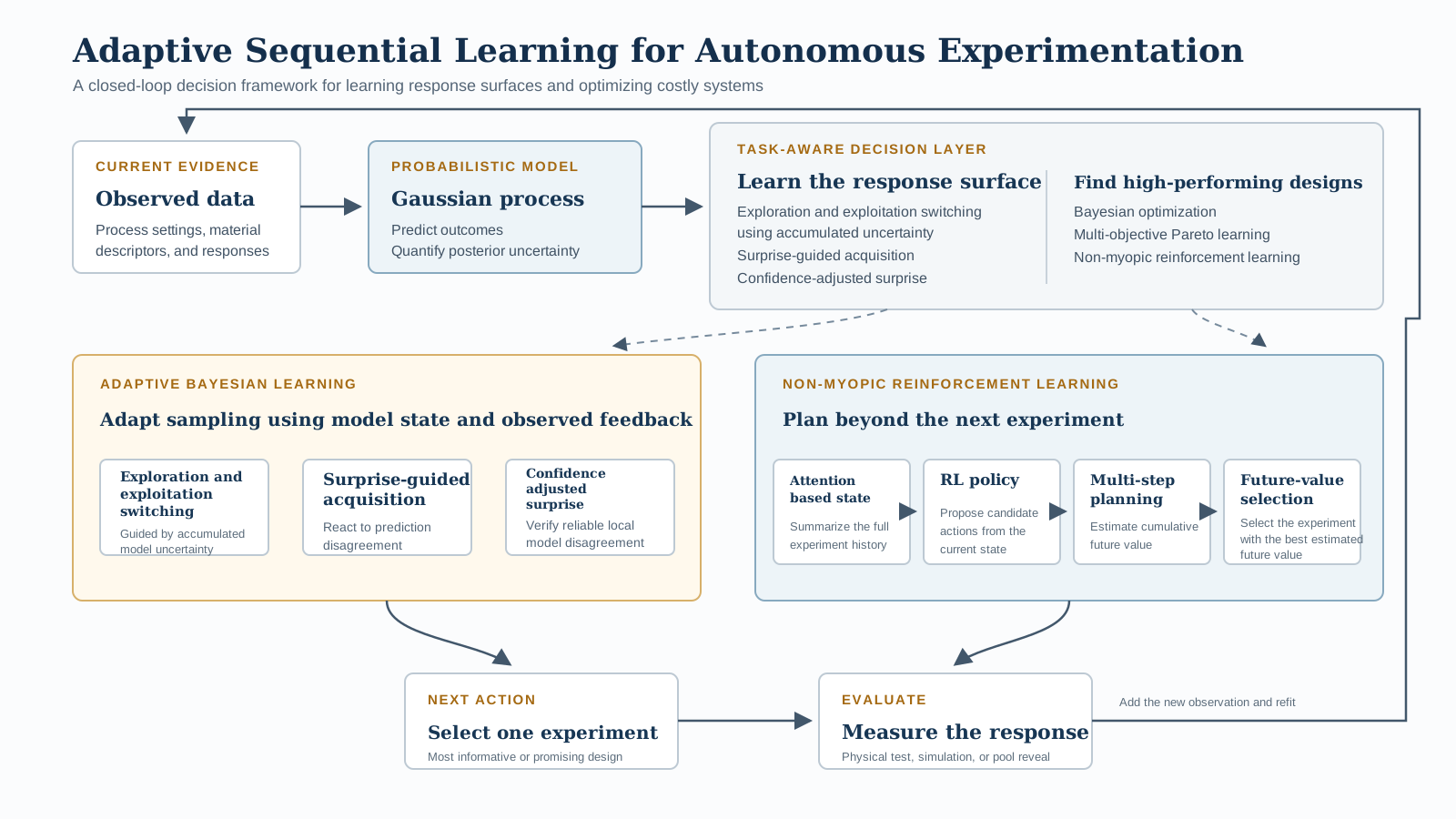
This project develops adaptive policies for deciding which costly experiment to perform next. Gaussian-process models quantify predictive uncertainty, while uncertainty-triggered switching, surprise feedback, confidence-aware verification, multi-objective Bayesian optimization, and finite-horizon reinforcement learning improve how limited experimental budgets are allocated.
Applications: Materials discovery, additive manufacturing, process optimization, and self-driving laboratories
Selected papers
- Toward Futuristic Autonomous Experimentation: A Surprise-Reacting Sequential Experiment PolicyIEEE Transactions on Automation Science and Engineering, 2024
- An augmented surprise-guided sequential learning framework for predicting the melt pool geometryJournal of Manufacturing Systems, 2024
- A data driven sequential learning framework to accelerate and optimize multi-objective manufacturing decisionsJournal of Intelligent Manufacturing, 2024
- From automation to autonomy in smart manufacturing: a Bayesian optimization framework for modeling multi-objective experimentation and sequential decision makingInternational Journal of Advanced Manufacturing Technology, 2025
- CA-SMART: An active learning framework for accelerating materials discovery under resource constraintsApplied Soft Computing, 2026
Research Project 02
Foundation Models and Manufacturing Intelligence
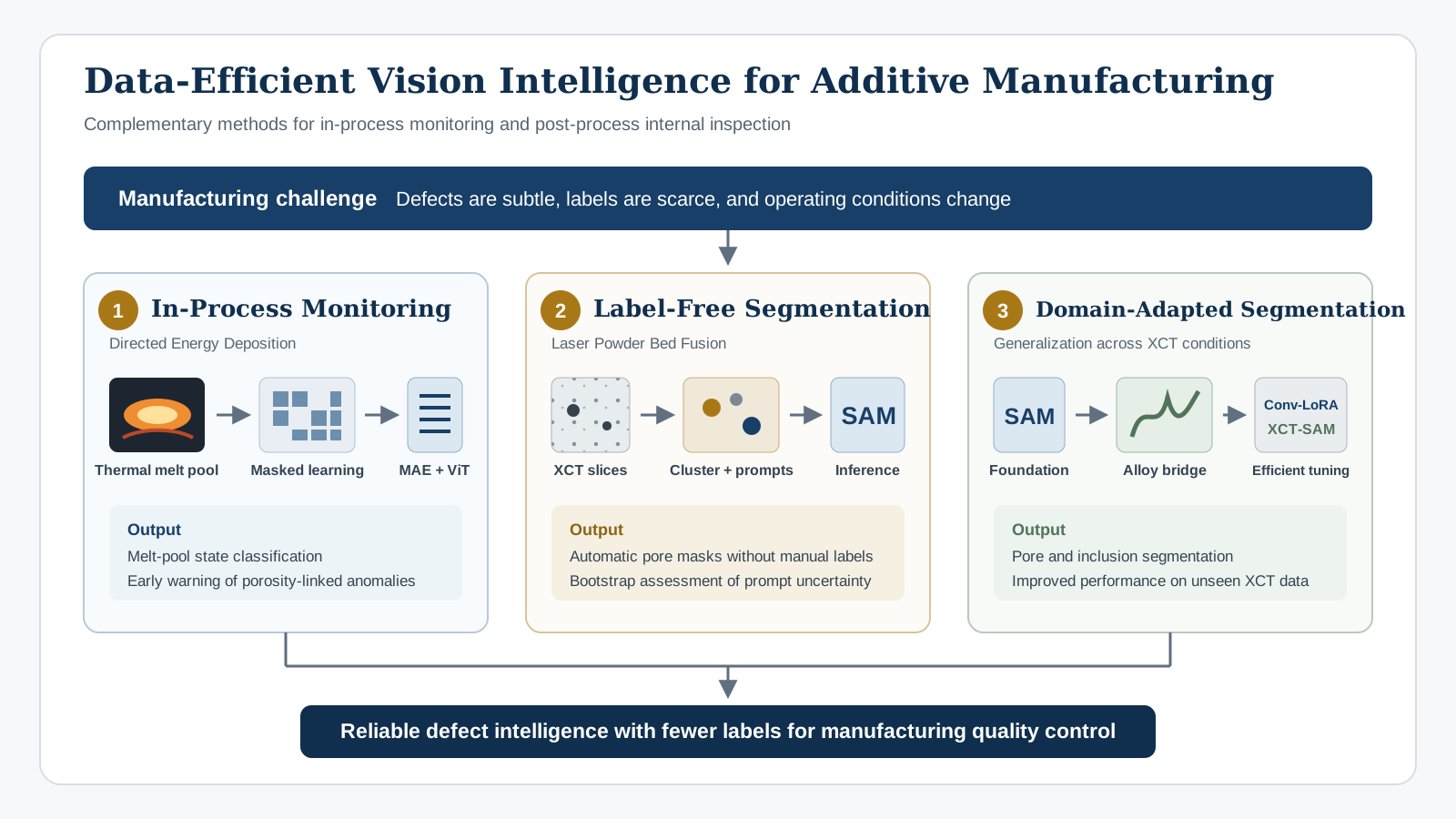
This project develops data-efficient vision methods for defect detection in additive manufacturing. It combines self-supervised learning for thermal melt-pool monitoring, automatic prompt generation for label-free porosity segmentation, and parameter-efficient adaptation of foundation models for XCT defect segmentation. The goal is to support reliable quality control when labeled manufacturing data are limited.
Applications: Laser powder bed fusion, directed energy deposition, XCT inspection, and edge deployment
Related papers
- In-situ melt pool characterization via thermal imaging for defect detection in Directed Energy Deposition using Vision TransformersJournal of Manufacturing Processes, 2025
- An unsupervised approach towards promptable porosity segmentation in laser powder bed fusion by Segment Anythingnpj Advanced Manufacturing, 2025
- XCT-SAM: Sequential Parameter-Efficient Domain Adaptation of SAM for Industrial XCT Defect SegmentationIAPR Workshop on Machine Vision for Industrial Inspection, ICPR 2026
Research Project 03
Health Informatics and Clinical Decision Support
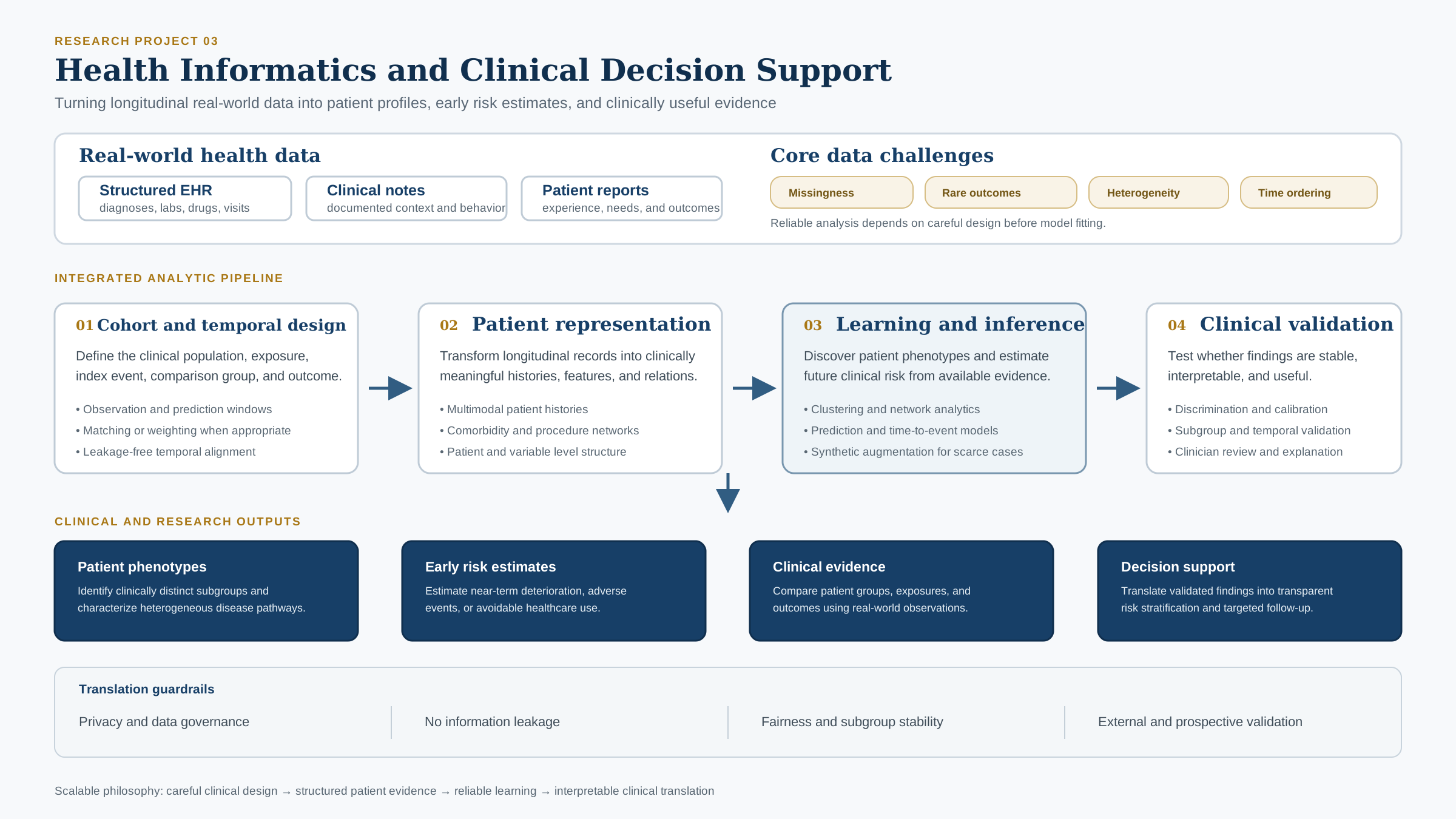
This project develops reliable methods for learning from real-world health data. The work combines careful cohort design, longitudinal patient representation, phenotype discovery, rare-event prediction, synthetic data augmentation, and model interpretation. The goal is to identify clinically meaningful patient groups and estimate risk early enough to support targeted follow-up.
Applications: Kidney disease, acute kidney injury, cardiac amyloidosis, psychiatric outcomes, drug safety, cancer care, and hospital readmission
Selected papers
- Synthetic data-augmented machine learning for 30-day readmission prediction in patients with chronic conditions: a retrospective real-world studyBMJ Open, 2026
- A machine learning framework for identifying phenotypes in chronic kidney diseaseHealthcare Analytics, 2025
- Synthetic Data-Driven Early Prediction Framework for Acute Kidney Injury in Patients Receiving Vancomycin and Ceftazidime/AvibactamPharmacotherapy, 2025
- Evaluating the kidney disease progression using a comprehensive patient profiling algorithm: A hybrid clustering approachPLOS One, 2025
- Impact of COVID-19 on mucormycosis presentation and laboratory values: A comparative analysisPLOS One, 2025
- Exploring Patient-Centered Perspectives on Suicidal Ideation: A Mixed-Methods Investigation in Gastrointestinal Cancer CareCancers, 2025
- SARS-CoV-2 infection is associated with an increase in new diagnoses of schizophrenia spectrum and psychotic disorder: A study using the US national COVID cohort collaborativePLOS ONE, 2024
Research Project 04
Spatiotemporal Modeling and Tracking
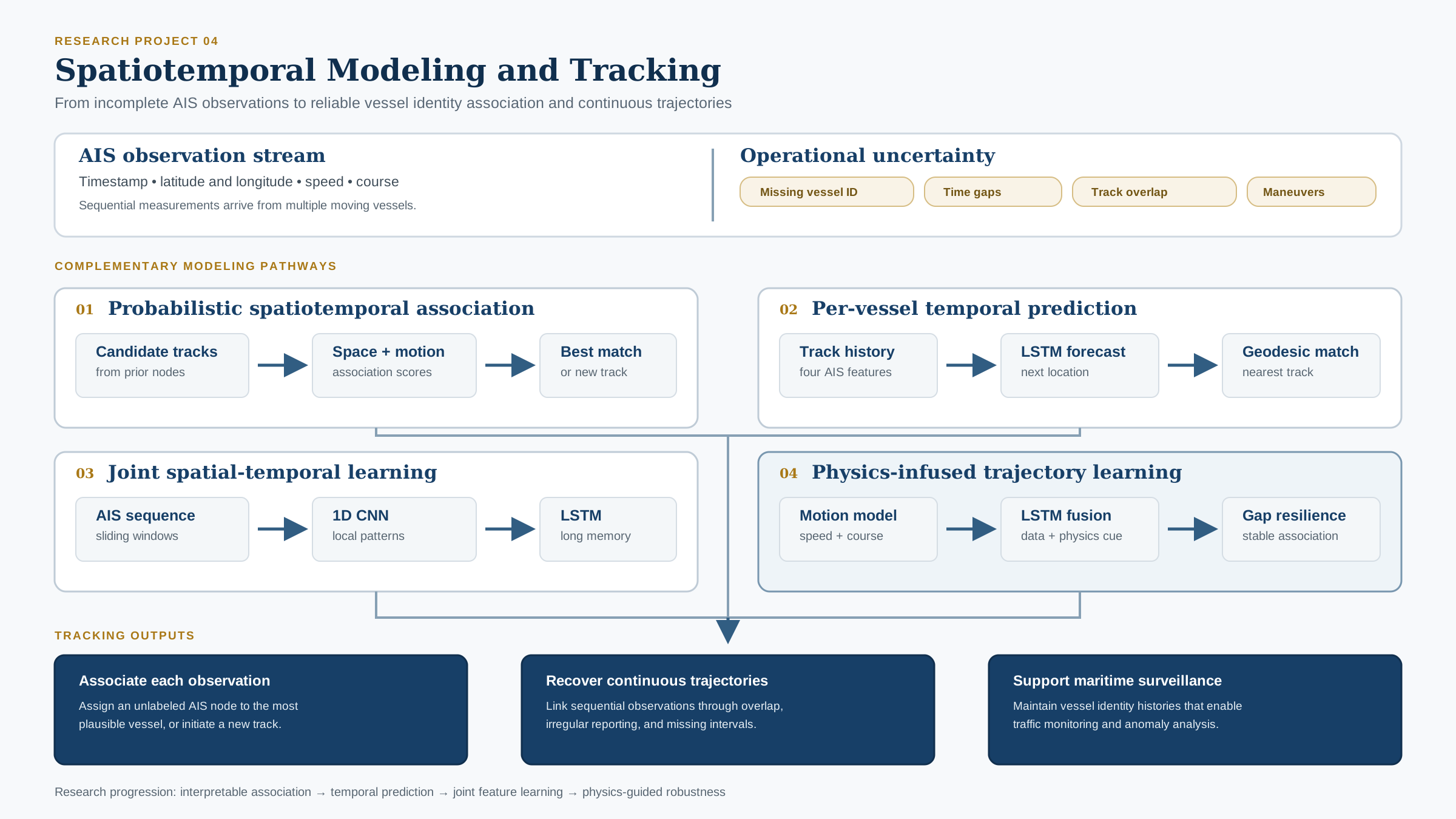
This project develops spatiotemporal methods for associating incomplete AIS observations with the vessels that generated them. The research progresses from interpretable online association and geodesic location prediction to CNN-LSTM sequence learning and physics-infused models that remain reliable when vessel identifiers are missing, trajectories overlap, or observations contain time gaps.
Applications: Marine surveillance, vessel identity association, trajectory recovery, traffic monitoring, and anomaly analysis
Related papers
- A Spatio-Temporal Track Association Algorithm Based on Marine Vessel Automatic Identification System DataIEEE Transactions on Intelligent Transportation Systems, 2022
- Multi model LSTM architecture for Track Association based on Automatic Identification System DataProceedings of the IISE Annual Conference & Expo, 2023
- A CNN-LSTM Architecture for Marine Vessel Track Association Using Automatic Identification System (AIS) DataSensors, 2023
- Advancing Marine Surveillance: A Hybrid Approach of Physics Infused Neural Network for Enhanced Vessel Tracking Using Automatic Identification System DataJournal of Marine Science and Engineering, 2024